Heat, Time, and Contact: Three Levers for Better Immersion Coffee
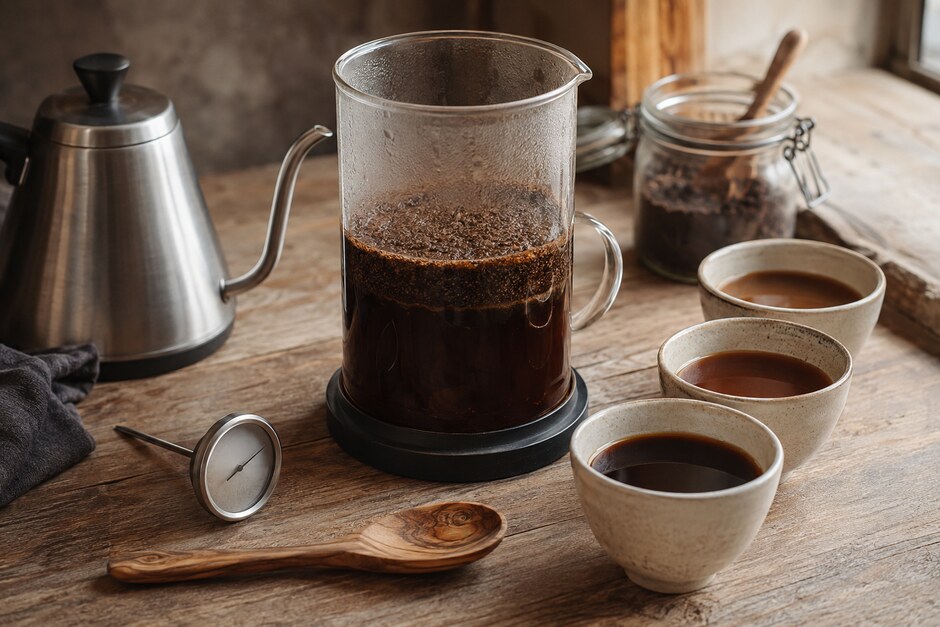
Immersion brewing looks forgiving because coffee and water remain together in one vessel. Yet the method still responds to three powerful levers: heat, time, and contact created by agitation. When all three change at once, a disappointing cup is difficult to diagnose. When they are tested separately, immersion becomes one of the clearest ways to learn extraction.
Use a brewer designed for hot liquids, place it on a stable surface, and follow its manufacturer instructions. Take care with hot water and never force a plunger or sealed component.
Build one baseline brew
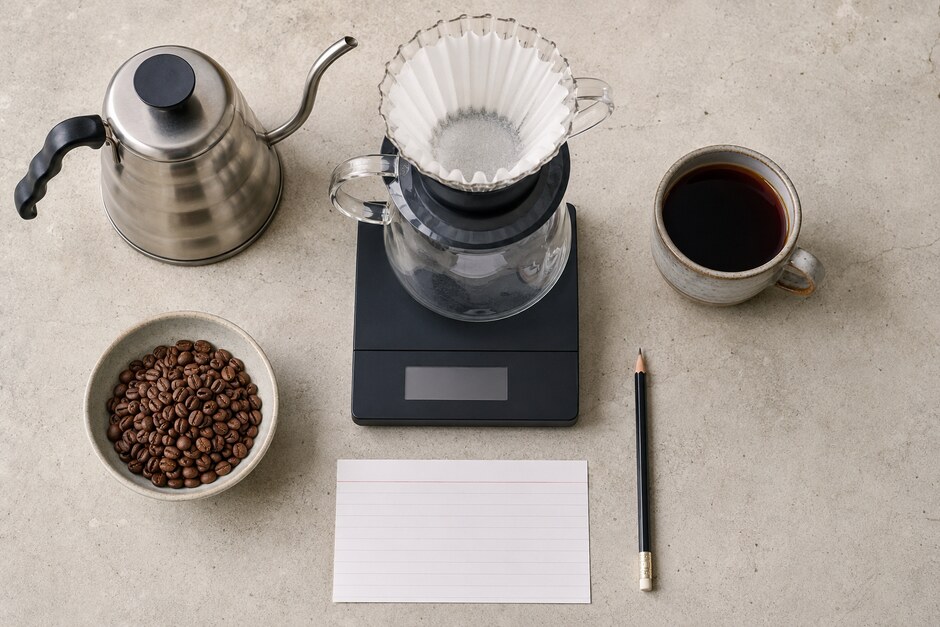
Choose a coffee dose, water mass, grind setting, and ratio that fit the brewer. Record the water temperature, time from first pour to separation, and any stirring or swirling. Preheat the vessel if that is part of your normal routine.
At the end of the steep, separate the liquid from the grounds completely. Leaving coffee in contact with the bed while tasting extends the real brew time and weakens the comparison.
Lever one: heat
Hotter water generally increases the rate at which soluble material moves into the brew. Cooler water slows that process. Roast level and coffee character influence which range tastes balanced, so avoid treating one temperature as mandatory.
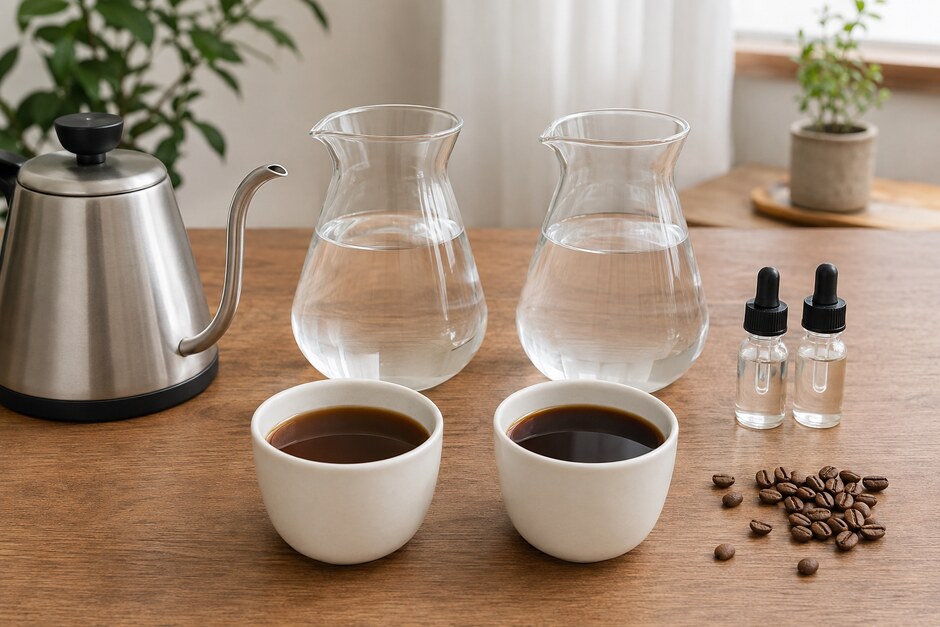
Brew two small cups with a clear but safe temperature difference while holding time, ratio, grind, and agitation constant. Taste after both cups cool to a similar level. The hotter cup may show more sweetness and depth, or it may reveal dryness and roast bitterness. The cooler cup may become gentler, or it may taste hollow and sharp.
Lever two: time
Contact continues throughout the steep, though extraction does not progress at a perfectly constant rate. Compare a shorter and longer steep at the same temperature. Begin timing at the same moment in the pour and separate each brew promptly at its target.
If the longer cup gains sweetness and finish, the baseline may have ended too early. If it becomes rough without gaining clarity, a finer grind or extra agitation is unlikely to be the first useful move.
Lever three: agitation
Stirring, swirling, or a forceful pour increases contact by moving water around the particles and breaking dry pockets. It can improve evenness, but excessive movement may create more fine-particle suspension or speed extraction beyond the intended point.
Compare one gentle, repeatable stir with no deliberate agitation. Keep the motion simple enough to reproduce. Do not use aggressive tools that could damage the brewer.
Run a four-cup learning matrix
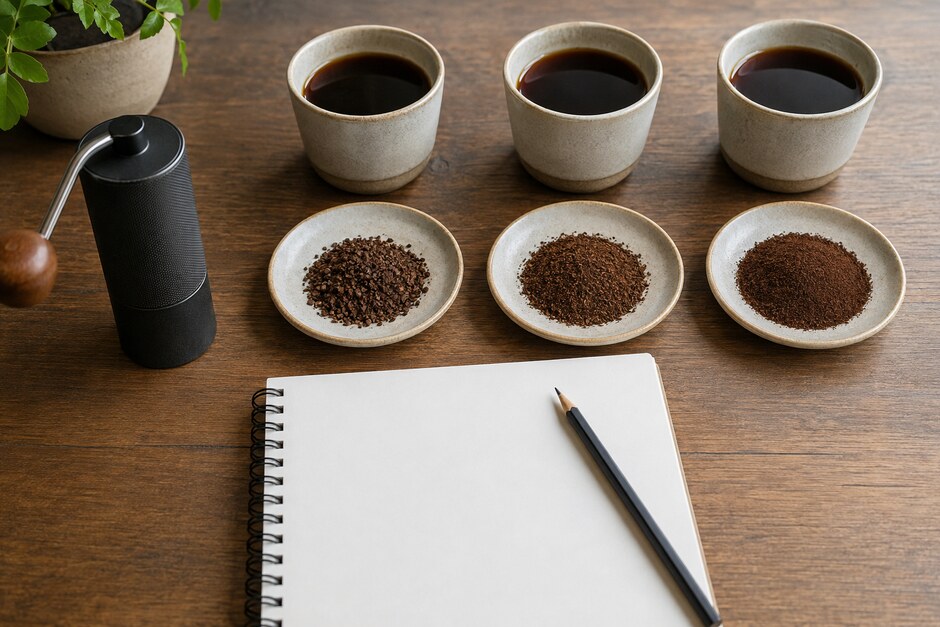
You do not need to test every combination at once. Across several sessions, compare the baseline with one hotter brew, one longer brew, and one more-agitated brew. Use small portions to reduce waste and keep the same beans and water.
Record body, sweetness, acidity, bitterness, clarity, and finish. Note visible sediment separately from flavor; a cloudy cup is not automatically over-extracted, and a clear cup is not automatically balanced.
Change grind only after reading the levers
If temperature, time, and agitation tests all remain weak or hollow, a finer grind may create more available surface. If the cups are consistently dry and intense, a coarser setting may help. Make the grind change after the matrix so you understand what the other levers can and cannot solve.
The final recipe should use the least complicated combination that produces the cup you want. Immersion brewing rewards consistency: controlled heat, a clear timer, one defined contact motion, and complete separation. Once those are stable, improvement becomes a choice rather than a guess.