Bloom With a Purpose: A Simple Test for Fresher Pour-Over Coffee
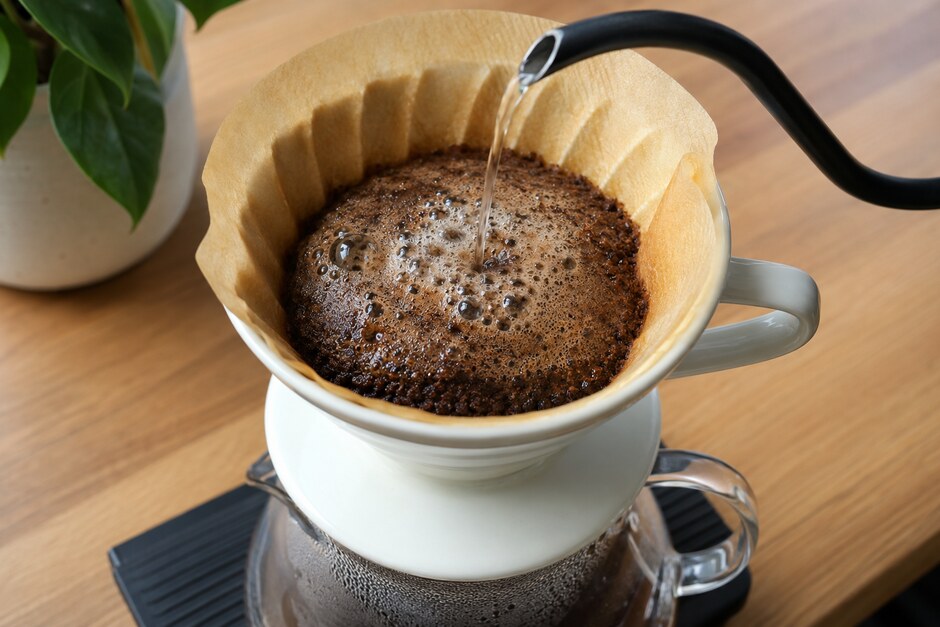
The bloom is the first small pour in many pour-over recipes. Freshly roasted coffee releases carbon dioxide when hot water reaches it, causing the bed to rise, bubble, and resist wetting. A short pause can let gas escape and help later water contact the grounds more evenly. But a dramatic bloom is not a quality score, and a longer pause is not automatically better.
The bloom is useful when it serves a clear purpose: wet the entire dose with a controlled amount of water, observe gas release, and create an even starting bed for the rest of the brew.
Prepare a repeatable baseline
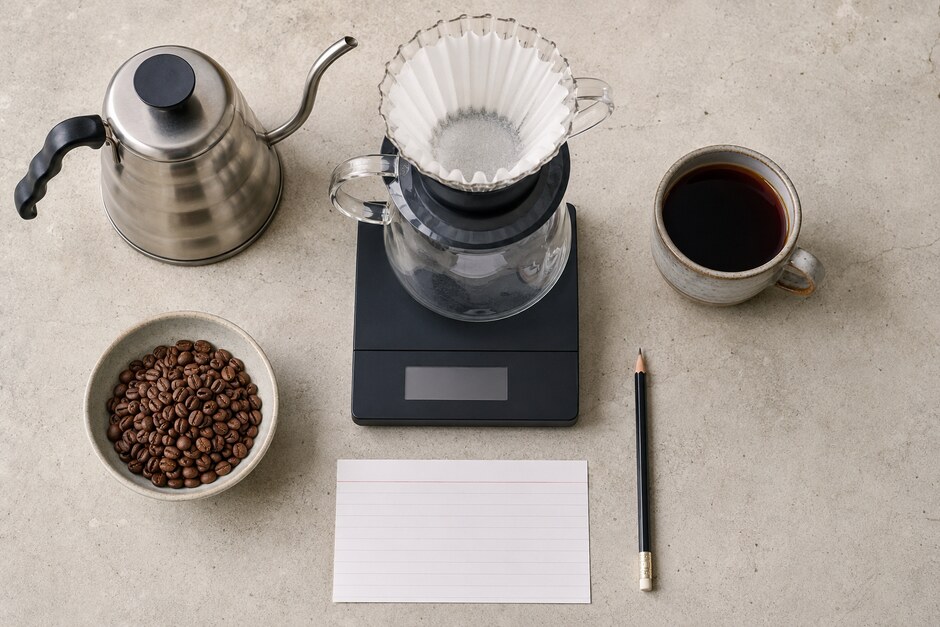
Use a stable brewer, rinsed filter, measured coffee dose, known water mass, and a grind setting that already produces a reasonable cup. Level the dry grounds gently without compacting them. Place the brewer on a scale and prepare the kettle safely on a stable surface.
Hot water can burn. Pour with a controlled grip, keep the work area clear, and follow the safety guidance for the kettle and brewer.
Use enough water to reach every ground
A common starting point is roughly two to three times the coffee dose in bloom water. The exact amount is less important than complete wetting without flooding the bed. Begin near the center, move outward in a small spiral, and avoid pouring directly down the filter wall.
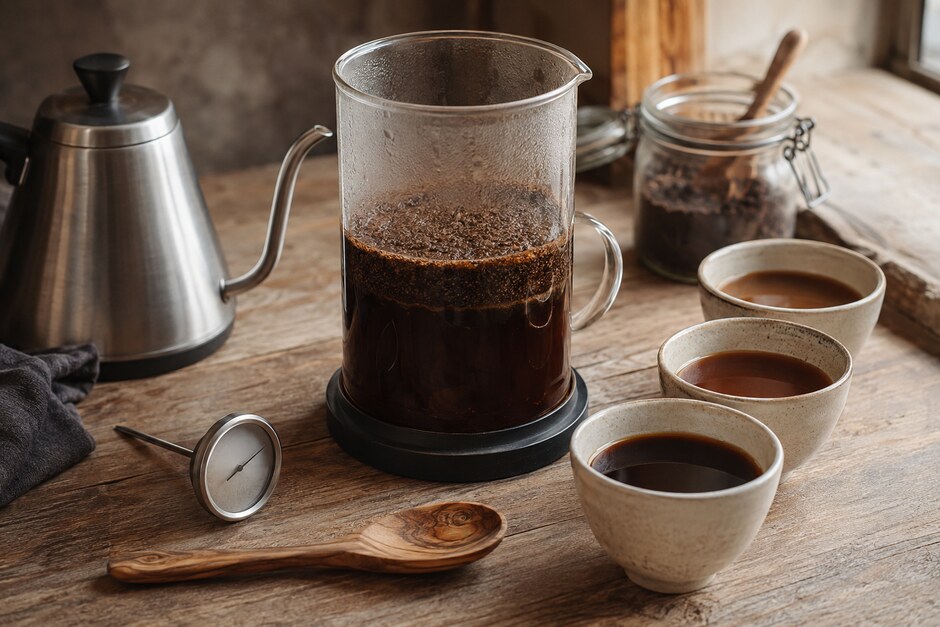
Look for dry islands. A gentle swirl or careful stir can help, but use the same motion every time. Aggressive agitation can move fine particles into the filter and change the drawdown later.
Watch the bed rather than chasing bubbles
Fresh coffee may expand strongly, while older coffee can show a quiet surface. Roast level, storage, grind size, and days since roasting all affect the display. A lack of large bubbles does not prove the coffee is unusable.
The practical signs are whether the bed becomes evenly dark, whether trapped dry pockets remain, and whether the surface settles enough for the next pour to enter predictably.
Run a two-cup bloom test
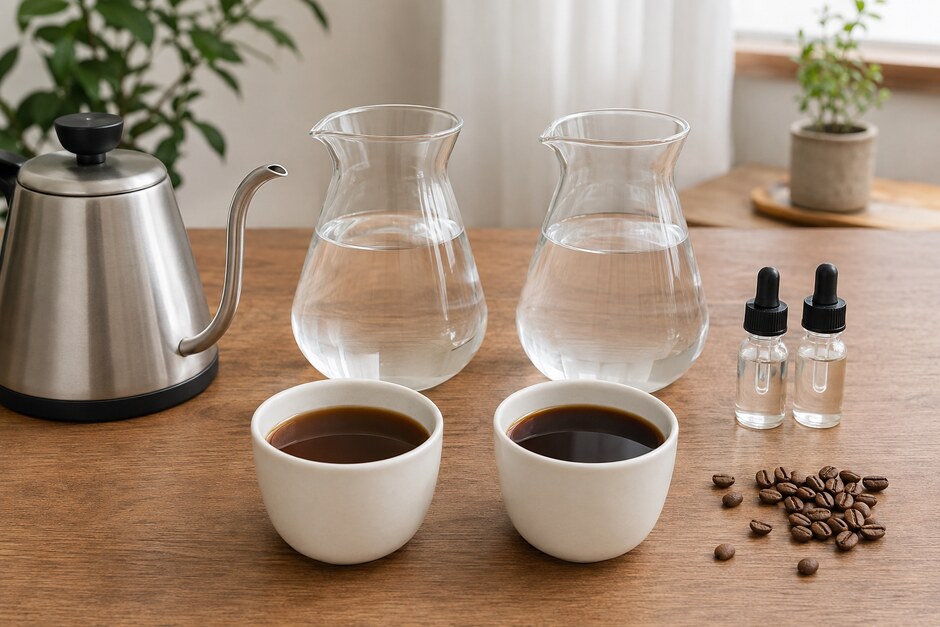
Brew one cup with a brief, even bloom and one cup with the same bloom-water amount but a longer pause. Keep the total coffee, water, temperature, grind, and later pours the same. Record bloom duration and total brew time.
Taste the cups side by side after cooling. Look for sweetness, clarity, dry finish, hollow acidity, and aroma. If the longer bloom improves balance, keep it. If the cups are similar, choose the shorter, simpler routine. If the longer pause tastes flatter, the coffee may not benefit from the extra delay.
Adapt to coffee age
Very fresh coffee often releases more gas and may need more time or better agitation to become evenly saturated. As the same bag ages, the bloom can become quieter and the useful pause may shorten. This is one reason a recipe can drift without any grinder change.
Store beans according to the roaster’s guidance in a dry, suitable container away from heat and strong odors. Avoid repeatedly opening a large supply if smaller portions are practical.
Diagnose bloom problems correctly
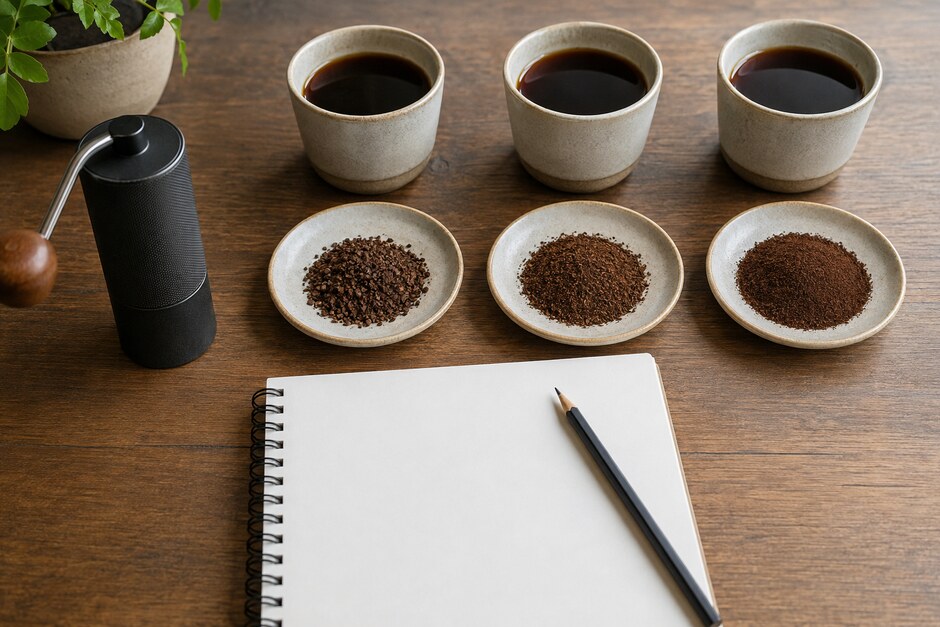
If later pours create sudden channels or pale patches, the first wetting may have been incomplete. If drawdown becomes excessively slow after vigorous swirling, agitation may have moved too many fines. If both test cups taste weak, the main issue may be grind, ratio, water, or overall contact rather than bloom duration.
Record the bloom as one part of the recipe, not a ritual separated from the cup. Its success is not measured by height or foam. It is measured by an even coffee bed, predictable flow, and a flavor result you can repeat.