Grind Size Is a Timeline: Dial In by Reading the Drawdown
Grind size is often presented as a label: coarse for one brewer, medium for another, fine for a third. Those words are only starting points. In practice, grind size creates a timeline. It changes how quickly water moves, how long the grounds remain in contact, and how evenly flavor can be extracted from particles of different sizes.
The useful setting is not a number copied from another grinder. It is the setting that produces a repeatable flow and a balanced cup with your coffee, water, dose, brewer, and technique.
Establish one honest baseline
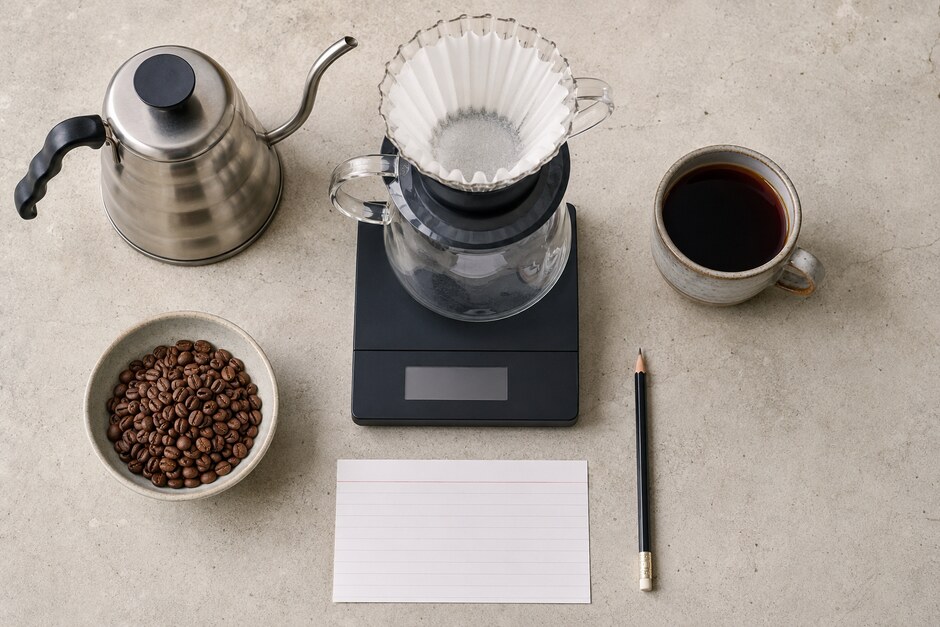
Choose a recipe you can repeat without rushing. Record coffee dose, water mass, temperature, pouring sequence, filter, brewer, and total time. Use freshly ground coffee and let the grinder finish before removing the catch cup.
Do not change the grind and the pouring pattern together. If the baseline is inconsistent, practice the sequence before diagnosing flavor.
Watch the drawdown as evidence
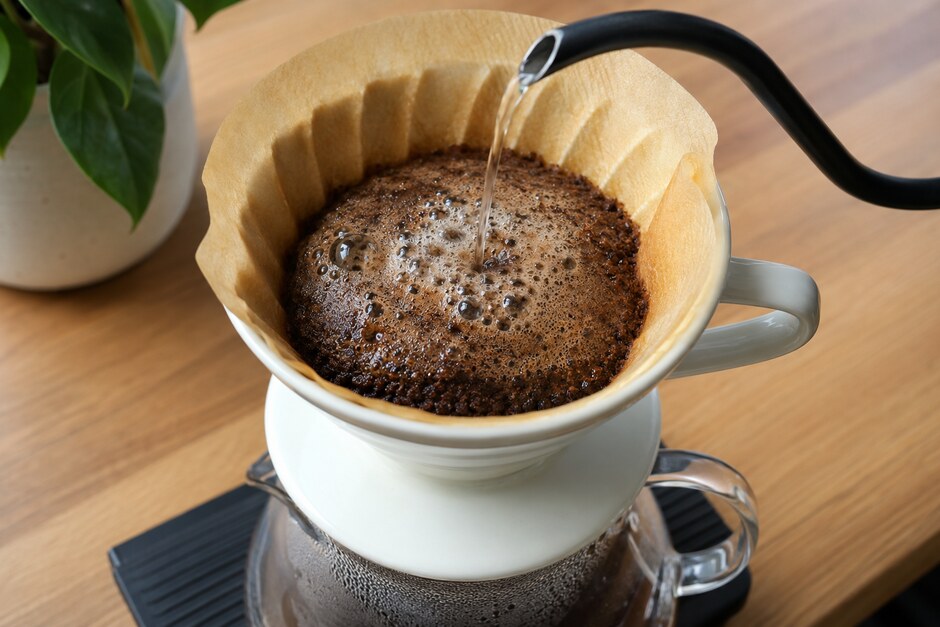
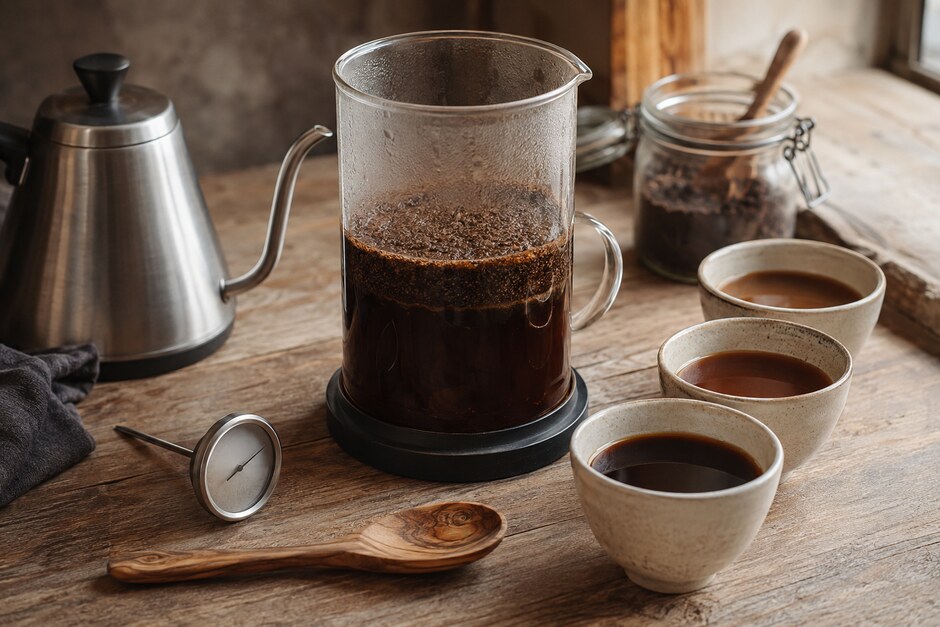
Drawdown is the period in which water passes through the coffee bed and filter. A much faster flow after a coarser adjustment usually reduces contact. A much slower flow after a finer adjustment usually increases it. But the clock alone cannot tell you whether the water traveled evenly.
Observe the surface during brewing. Water racing down one side, a bed that repeatedly exposes dry patches, or a filter wall coated with excessive fine particles can make time difficult to interpret. Technique and grinder particle distribution are part of the picture.
Make a three-setting comparison
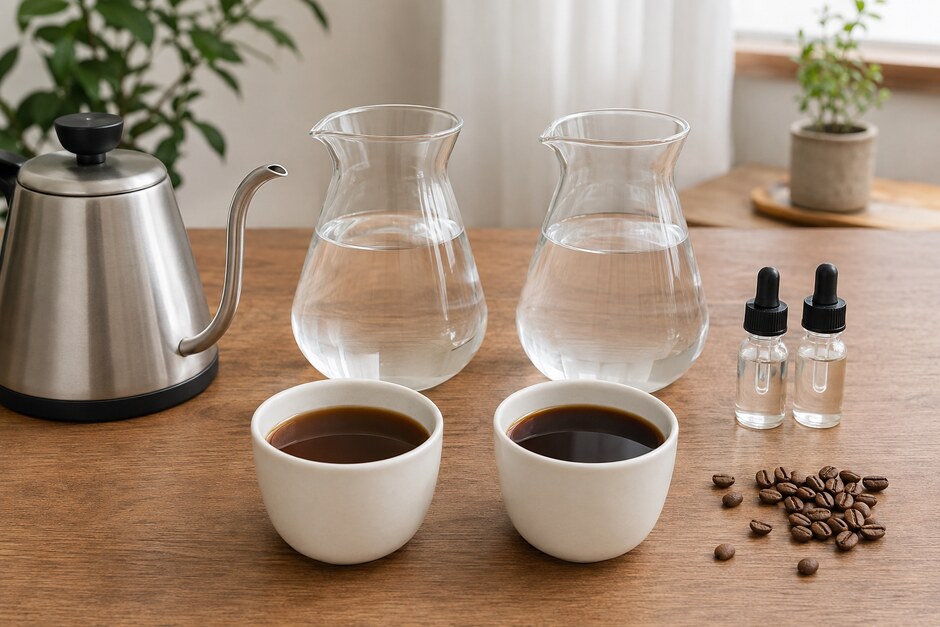
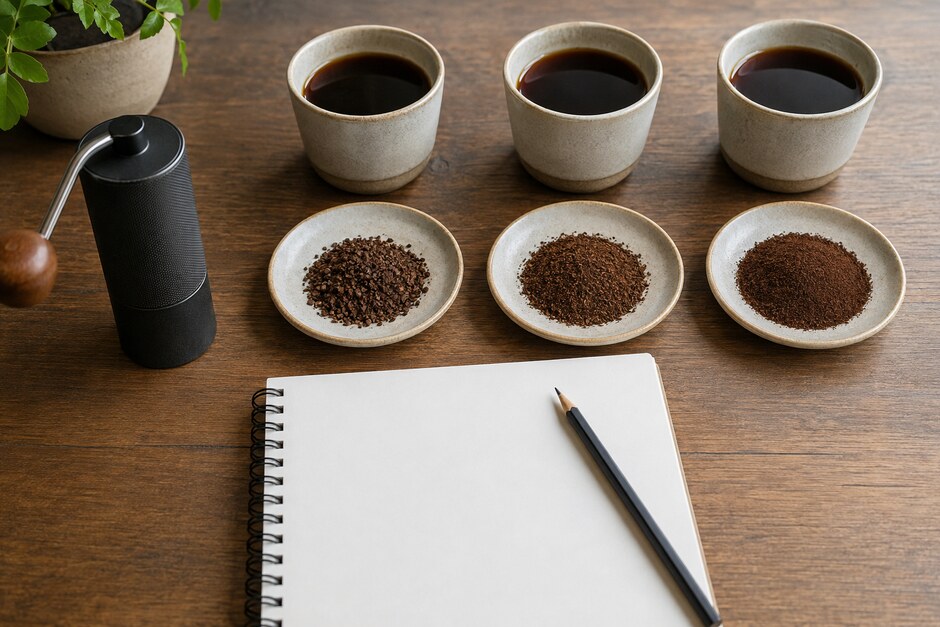
Brew three small cups using the baseline setting, one clearly coarser step, and one clearly finer step. Keep every other variable as close as possible. Label the cups only after brewing, then taste once they are safe and cool enough for flavor differences to appear.
The coarse cup may taste thin, sharp, simple, or surprisingly clean. The fine cup may become sweeter and fuller before eventually turning dry, bitter, muddy, or slow. These are tendencies, not laws. Let the cups provide the answer.
Separate strength from extraction
A stronger-tasting cup is not automatically better extracted. Concentration describes how much dissolved coffee is in the drink; extraction describes how much material was removed from the grounds. A fine grind can increase both, but uneven flow may create a cup that is simultaneously intense and hollow.
If a cup feels heavy yet lacks sweetness, making it even finer may amplify the problem. A slightly coarser setting and more even wetting can produce greater clarity and balance.
Adjust one meaningful step
Once the best of the three cups is identified, move halfway toward the neighboring setting if your grinder allows it. Repeat the brew twice. The goal is not a perfect cup produced once; it is a useful zone that survives small variations in pouring and room conditions.
When changing settings, follow the grinder manufacturer’s instructions. Some grinders should be adjusted only while running or empty, while others have different requirements. Never force a stuck adjustment.
Account for retention and aging
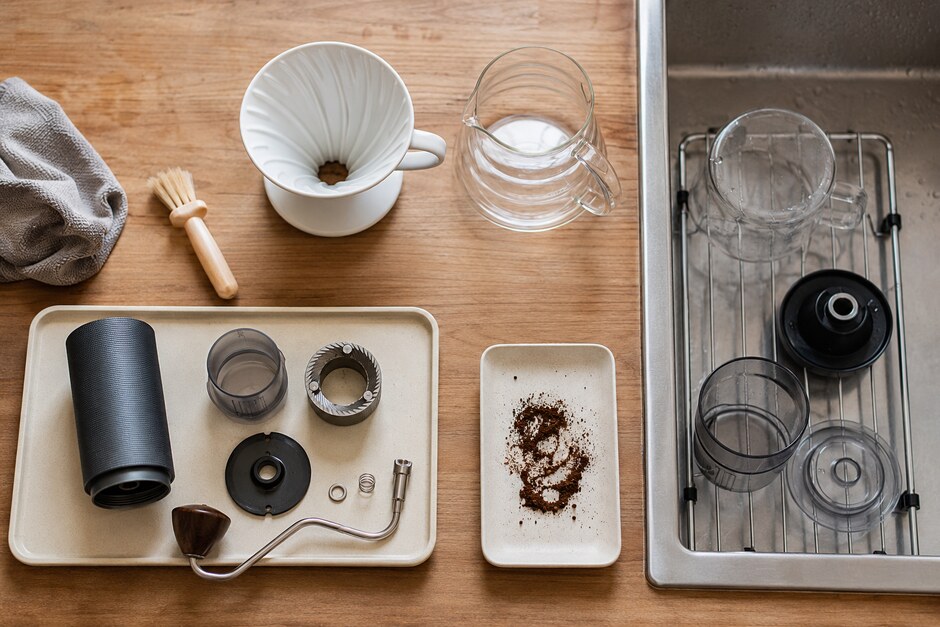
A grinder may hold a small amount of coffee from the previous setting. After a large change, the next dose can contain a mixture of old and new particles. Use the manufacturer’s recommended method for clearing retention without wasting more coffee than necessary.
Beans also change after opening. As they age, gas release and flow behavior can shift. A setting that worked two weeks ago may need a small correction even though the equipment is unchanged.
Keep a short dial-in note: setting, total time, visible flow, and one sentence about taste. Over time, these records teach you to read the brew itself. Grind size stops being a mysterious dial and becomes a controlled way to shape the coffee’s timeline.