Stop Chasing Recipes: Build a Brew Ratio You Can Repeat
Online coffee recipes often look precise while hiding the conditions that made them work: a particular grinder, water, brewer, roast, filter, and cup size. Copying the numbers can provide a starting point, but it cannot replace a ratio that fits your own setup. The useful goal is not one universal recipe. It is a measured relationship between coffee and water that you can reproduce and adjust deliberately.
A brew ratio is written as coffee mass to water mass. A 1:16 ratio means one gram of coffee for every sixteen grams of brewing water. Weighing both sides is more reliable than counting scoops or relying on kettle markings.
Choose a practical starting point
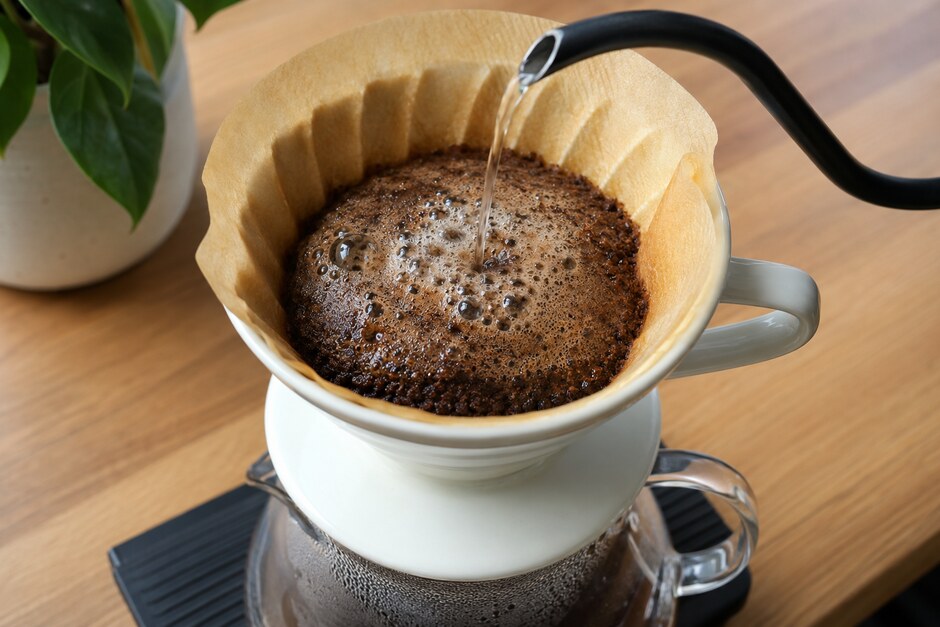
For filter coffee, 1:16 is a sensible middle test rather than a rule. Fifteen grams of coffee would use 240 grams of water. Scale the recipe to the amount you actually drink so you are not evaluating a cup that is too large, too cool, or unnecessarily wasteful.
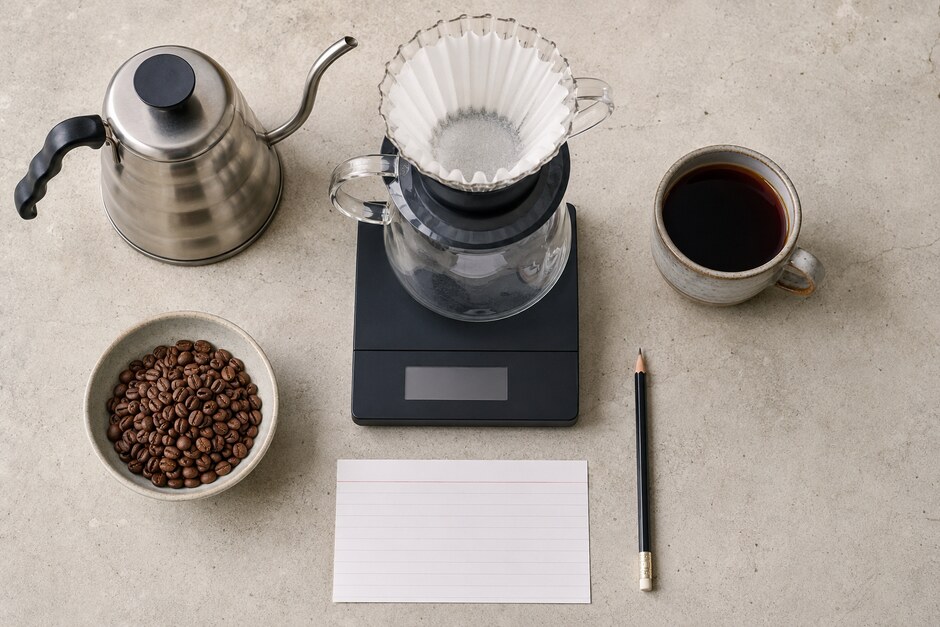
Use a stable scale on a dry, level surface. Confirm the brewer and server fit safely, and keep water away from equipment that is not designed to be wet.
Keep ratio separate from technique
Changing from 1:16 to 1:15 makes the drink more concentrated if the rest remains similar, but it may also change flow and extraction. The ratio does not control everything. Grind size, water temperature, contact time, agitation, and the coffee itself still shape the result.
This is why the test should hold those variables as steady as possible. Otherwise, a stronger cup may be credited to the ratio when it actually came from a slower pour or finer grind.
Brew a three-ratio sequence
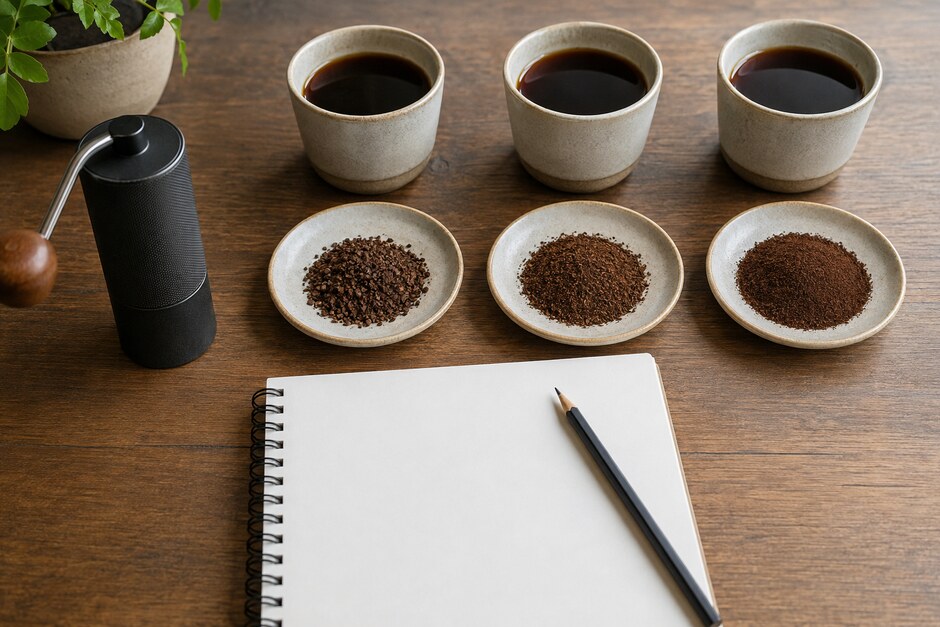
Prepare three small cups at 1:15, 1:16, and 1:17 using the same coffee dose if your brewer handles the volume. Keep grind, temperature, filter, and pouring pattern consistent. Record total brew time because the extra water in the longer ratio can extend contact.
Taste from the longest ratio toward the shortest, then reverse the order. The 1:17 cup may show greater openness but less weight. The 1:15 cup may feel fuller but obscure delicate notes. The middle may be balanced—or one of the outer cups may clearly suit the coffee better.
Separate strength from balance
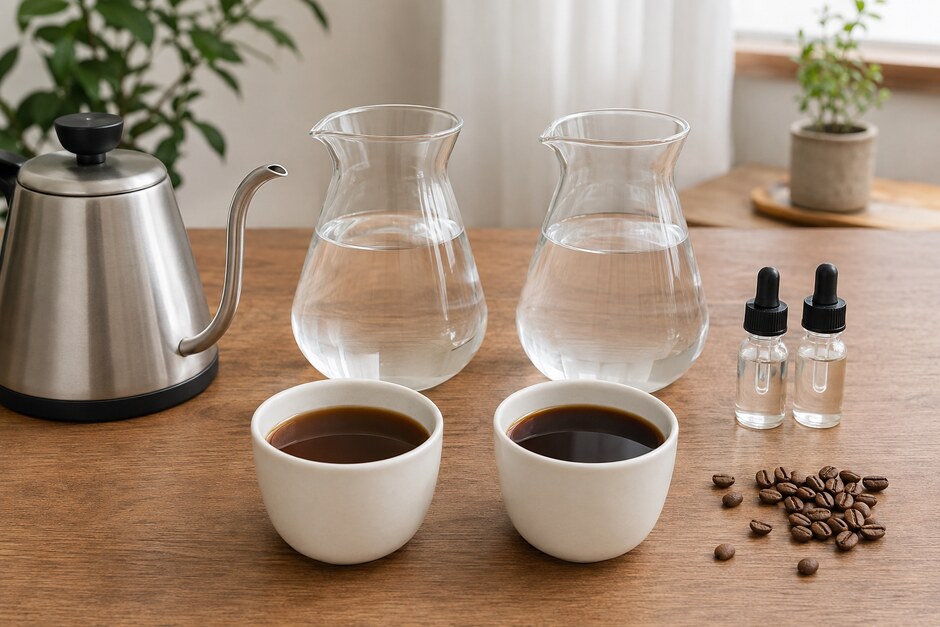
Preference for a strong cup is valid, but intensity alone can hide dryness, bitterness, or uneven extraction. Add a small measured amount of hot water to part of the strongest cup. If dilution reveals sweetness and clarity, the brew may have been well extracted but too concentrated for your preference.
If dilution only makes an unpleasant cup thinner, the issue is probably not ratio alone. Revisit grind and technique.
Adjust the ratio in useful steps
Choose the best of the three tests and repeat it on another day. If it remains reliable, make smaller changes only when the coffee calls for them. Moving from 1:16 to 1:15.5 is meaningful; changing several decimals without consistent technique is false precision.
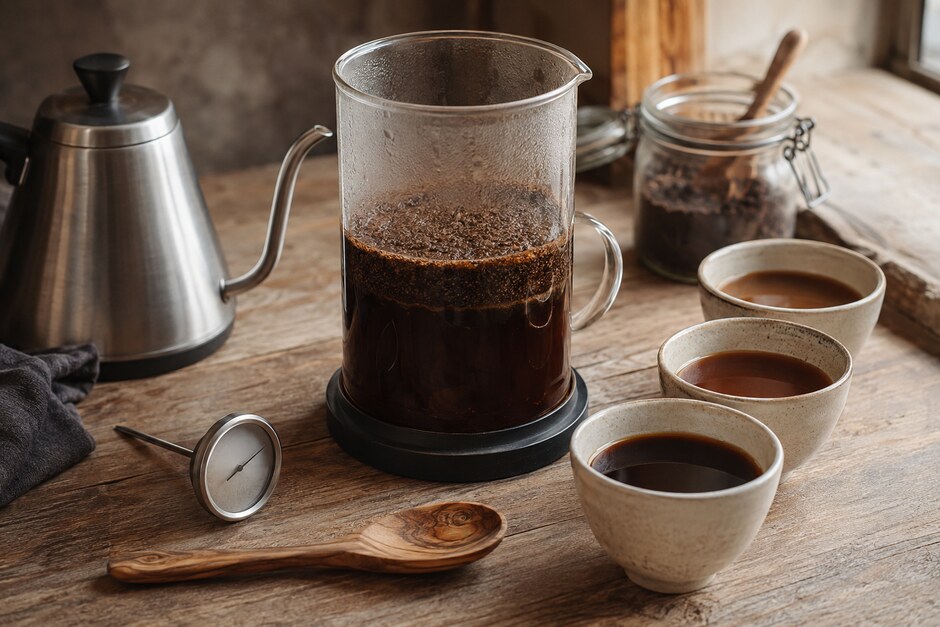
When increasing the batch size, do not assume every variable scales perfectly. A deeper coffee bed can alter flow. Keep the ratio but expect a grind or pouring adjustment, then verify by taste.
Create a compact recipe record
Write coffee name, roast date if known, coffee mass, water mass, ratio, grind setting, water, temperature, total time, and one flavor sentence. This record is more valuable than saving dozens of unrelated recipes because it connects numbers to a specific result.
A repeatable ratio reduces decisions without freezing the process. It gives you a stable centre. From there, changes in beans, age, water, and desired cup size can be handled one variable at a time instead of restarting from someone else’s recipe.