The Water Test: Why the Same Beans Taste Different in Two Kitchens
Coffee can change dramatically when the beans, grinder, and brewer move from one kitchen to another. Water is the most likely hidden variable. It makes up almost the entire drink, carries flavor compounds out of the grounds, and buffers the acids that reach the cup. Two waters that both taste clean on their own can produce noticeably different coffee.
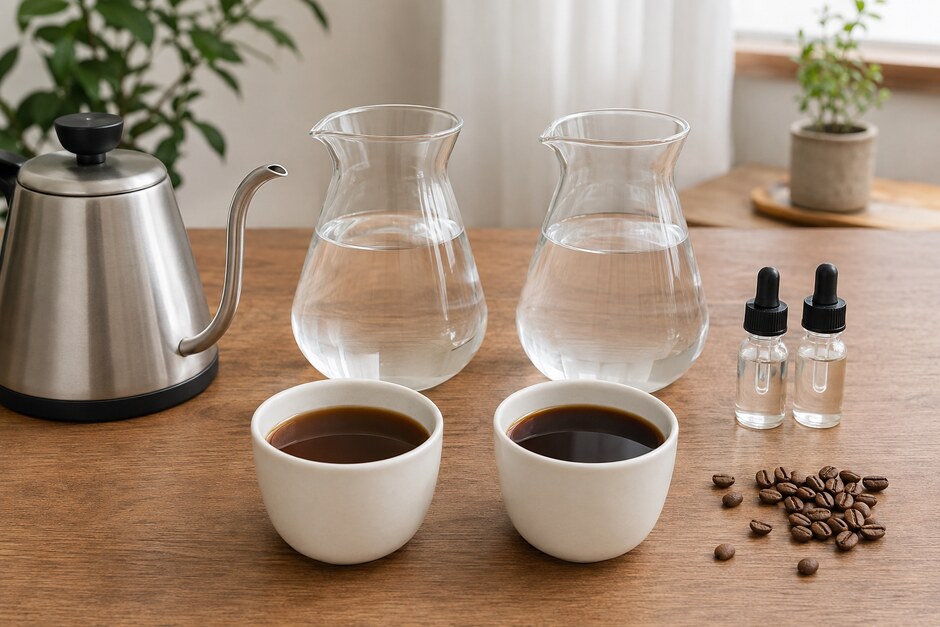
You do not need a laboratory to identify the effect. A controlled side-by-side brew can show whether water deserves attention before you replace beans or adjust every part of the recipe.
Choose two safe drinking waters
Compare your usual tap or filtered water with a different potable water that has a neutral taste. A sealed bottled water can be useful if its mineral information is available, but avoid strongly flavored mineral water. Do not brew with water that is unsafe to drink, and do not add non-food-grade minerals or chemicals.
Distilled or demineralized water alone is not a universal solution. It can taste flat and may not be suitable for every appliance. Follow the water guidance supplied by the brewer or kettle manufacturer.
Hold the coffee variables still
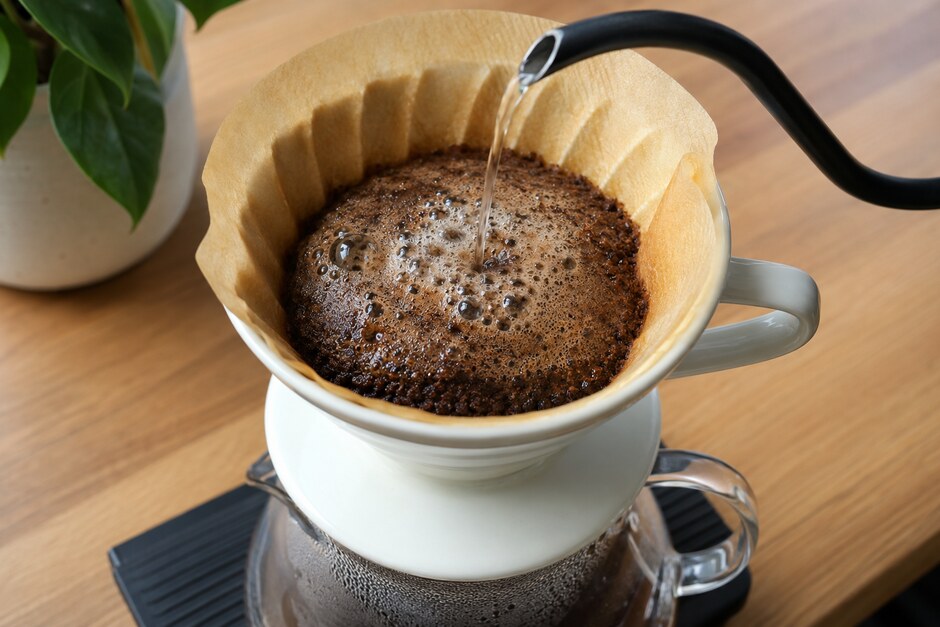
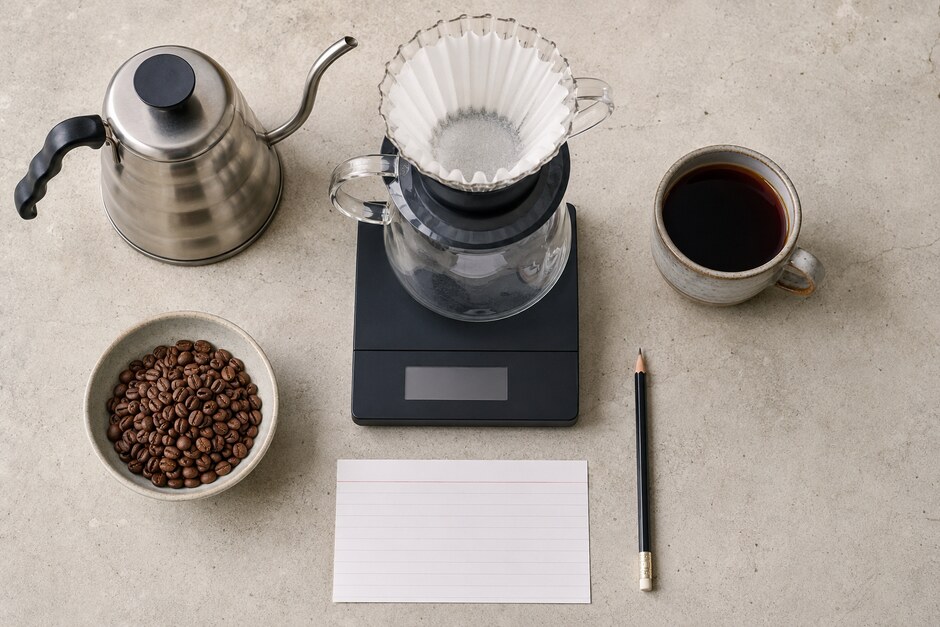
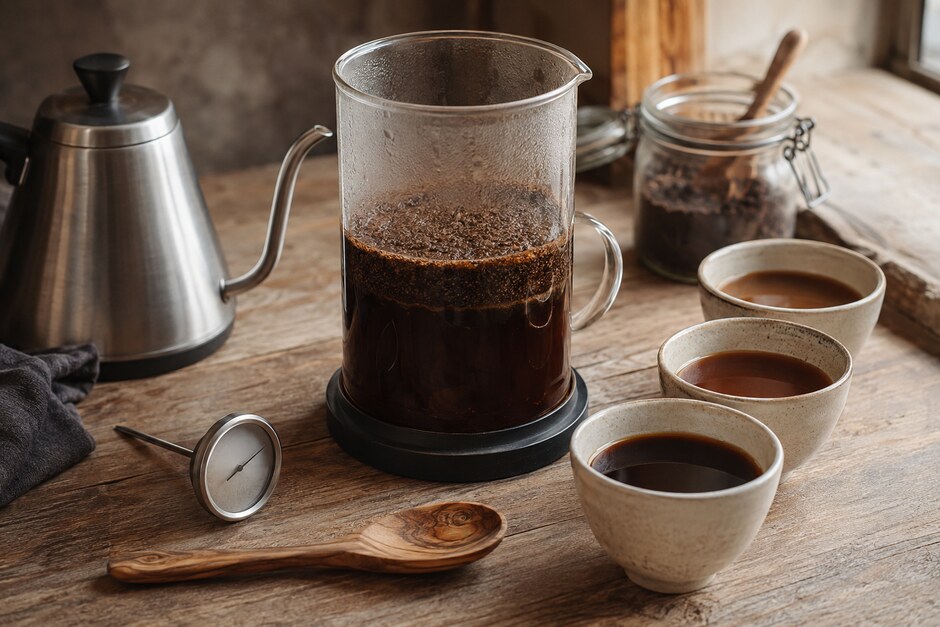
Use one bag of beans, one grind setting, equal coffee doses, the same coffee-to-water ratio, and identical brewers if possible. Heat each water to the same target and use the same pouring or steeping sequence. Preheat both vessels so one cup does not lose heat faster.
If you own only one brewer, make the cups consecutively and alternate which water goes first in a second round. This reduces the chance that a warm grinder, changing kettle, or your own expectations decide the result.
Taste the water before the coffee
Pour each water into an identical glass at room temperature. Notice chlorine, metallic notes, sweetness, saltiness, or a dry mineral finish. The water does not need to taste exciting; it should be clean and unobtrusive.
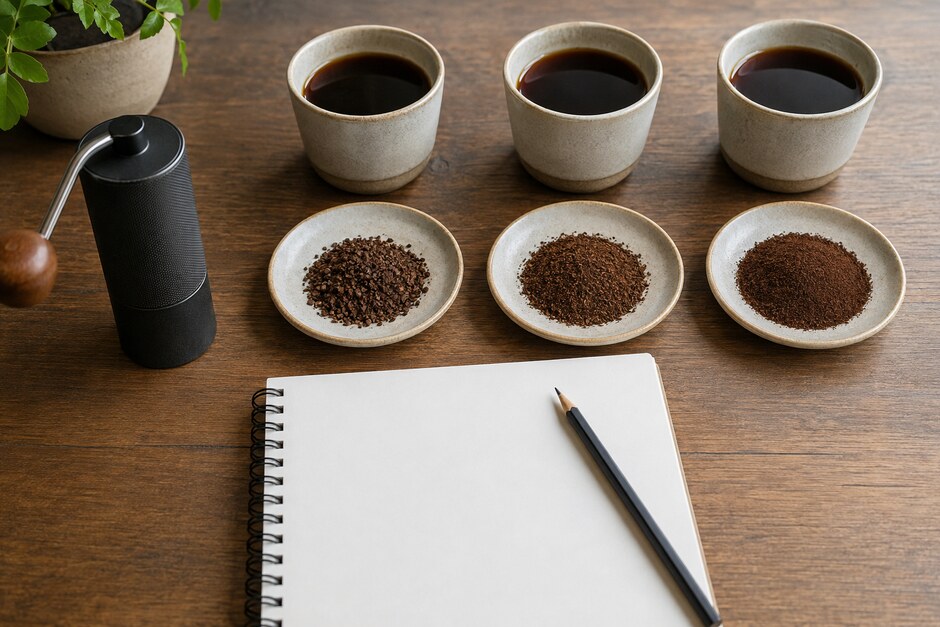
Then taste the brewed coffees after they have cooled enough to compare safely. Move back and forth rather than finishing one cup first. Record aroma, perceived acidity, sweetness, bitterness, body, and finish in simple words.
Understand hardness and alkalinity separately
Hardness generally describes dissolved calcium and magnesium. These minerals can influence extraction and texture. Alkalinity describes the water’s ability to buffer acidity. High alkalinity can make a bright coffee seem muted, while very low buffering can leave acidity feeling sharp or disconnected.
The two measurements are related but not interchangeable. A generic “hard” label cannot fully predict the cup. If your water provider publishes a report, use it as context rather than a perfect flavor forecast.
Read the difference, not an ideal number
If one cup is sweeter, clearer, and more balanced with the same recipe, that water is the more practical starting point for those beans. If both cups taste nearly identical, water may not be the current limitation. Move on to grind, ratio, freshness, or technique instead of solving a problem you cannot taste.
A very dull cup does not automatically prove excessive alkalinity, and a sour cup does not automatically prove low mineral content. Roast level, extraction, and temperature can create similar impressions.
Make the useful result repeatable
Record the water source, filter age, coffee, dose, grind setting, ratio, temperature, brew time, and tasting date. Household filters change as they are used, and municipal water can vary by season. A note helps explain why a familiar recipe may drift months later.
Choose the simplest reliable option. That may mean timely filter replacement, a suitable bottled water, or accepting local tap water and dialing the recipe around it. The purpose of the test is not to make water complicated. It is to reveal whether the largest ingredient in the cup is quietly changing everything else.